

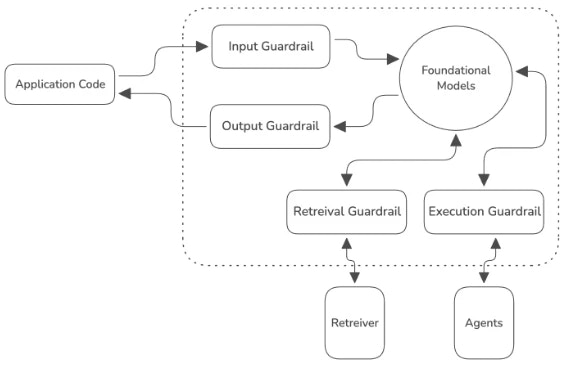
- Input Guardrails: For scanning inputs to a foundation model.
- Output Guardrails: For scanning outputs from a foundation model.
- Retrieval Guardrails (coming soon): To protect requests to and from retrievers.
- Execution Guardrails (coming soon): To protect requests to and from external agents and tools.
Setting Up Guards and Detectors
Users can configure Guards by selecting and combining different Detectors based on their specific needs. This customization allows for flexible and robust Guardrails that cater to diverse application requirements.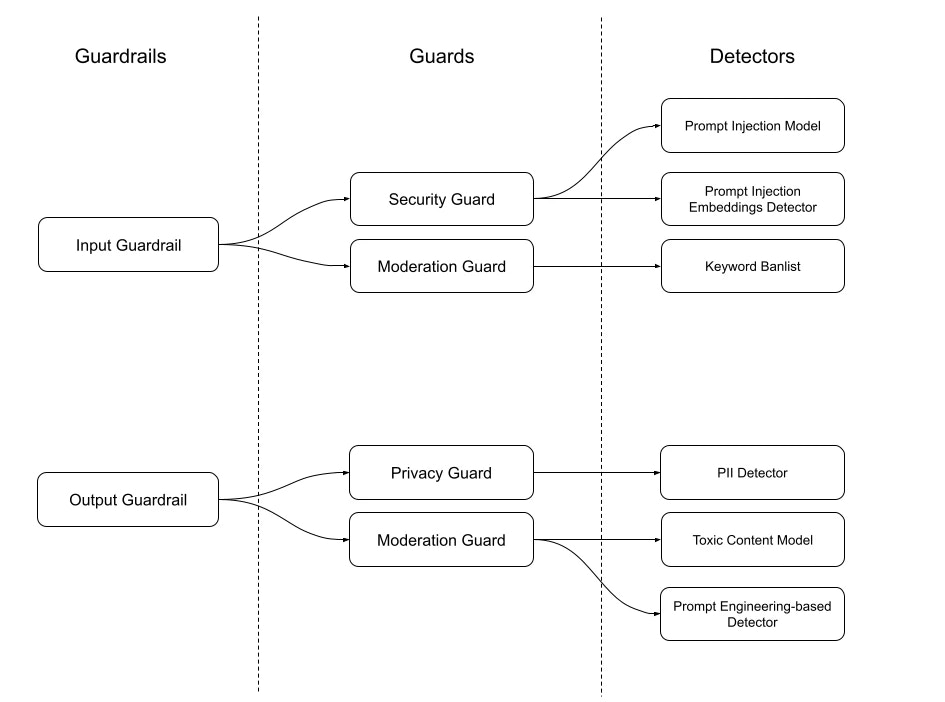
Example Configuration
Here is an example of how you can set up Guards and Detectors (see the Configuring Dome section for more details):Scan Results
The output from Dome’sscan functions is a ScanResult object. It contains the following fields
flagged: boolean value that indicates if the Guardrail has flagged the data that was passed through it. If this is true, it means the input is in violation of the policy the Guardrail aims to enforce. This value will always be the opposite of the value returned from the ScanResult’s.is_safe()method.response_string: a string that contains the Guardrail’s response message. This can be the original input if there was nothing wrong with it, a sanitized version of the input, or a message indicating that the input was blocked, along with the methods that blocked it.exec_time: float. the time it took for the Guardrail to scan the input, measured in millisecondstrace: a dictionary. This contains the execution information for every Guard in the Guardrail. This includes whether or not they were flagged, their individual execution times, and debugging information for each Detector in the Guard.