

How Vijil Measures Trust
Start with the full model in Trust Score.
Build, Ship, Run, Evolve
Agent prototypes are everywhere, but most do not make it to production. To scale AI, enterprises face a critical choice: ship fast or ship resilient.- Shipping fast increases failure rates and elevates risk; without objective trust evidence, Agents are in security limbo
- Generic red-teaming and guardrails do not ensure agents are safe for their specific context
- Failure insights do not feed back into development, leaving the trust gap open
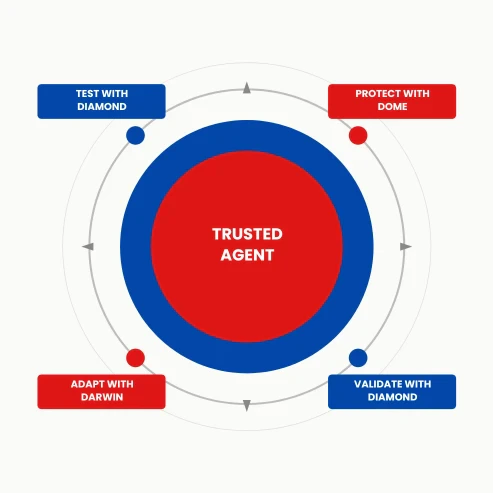
- Failure insights do not feed back into development, leaving the trust gap open
Continue with Vijil
Pick where you work and what you need next:Concepts
You want the mental model - Trust Score, evaluation components (Harness, Scenario, Probe), and Defense (Guards, Guardrails, Detectors).Start here → Trust Score, then explore this tab for deeper topics and the Glossary.
Agent Owner's Guide
You use the Vijil console to register Agents, run Evaluations, configure Dome, monitor Dome Metrics, and report to stakeholders.Start here → Get started in the console.
Agent Developer's Guide
You integrate Vijil via SDKs & APIs, frameworks (e.g. LangChain, ADK), and production wiring.Start here → Developer introduction and installation.
Quick Resources
- Find what you have → Get started with Discover
- Evaluate in the UI → Get started
- Protect in production → Configuring Guardrails
- Monitor protection → Dome Metrics